
Summary
Heat affects more than comfort.
Across logistics facilities, cold-storage operations, manufacturing plants, commercial properties, public buildings, and data centers, thermal exposure can influence building operations, maintenance requirements, equipment conditions, operational planning, and long-term ownership strategies.
Building Performance seeks to understand how facilities interact with heat before evaluating technologies intended to address it.
Why Heat Matters
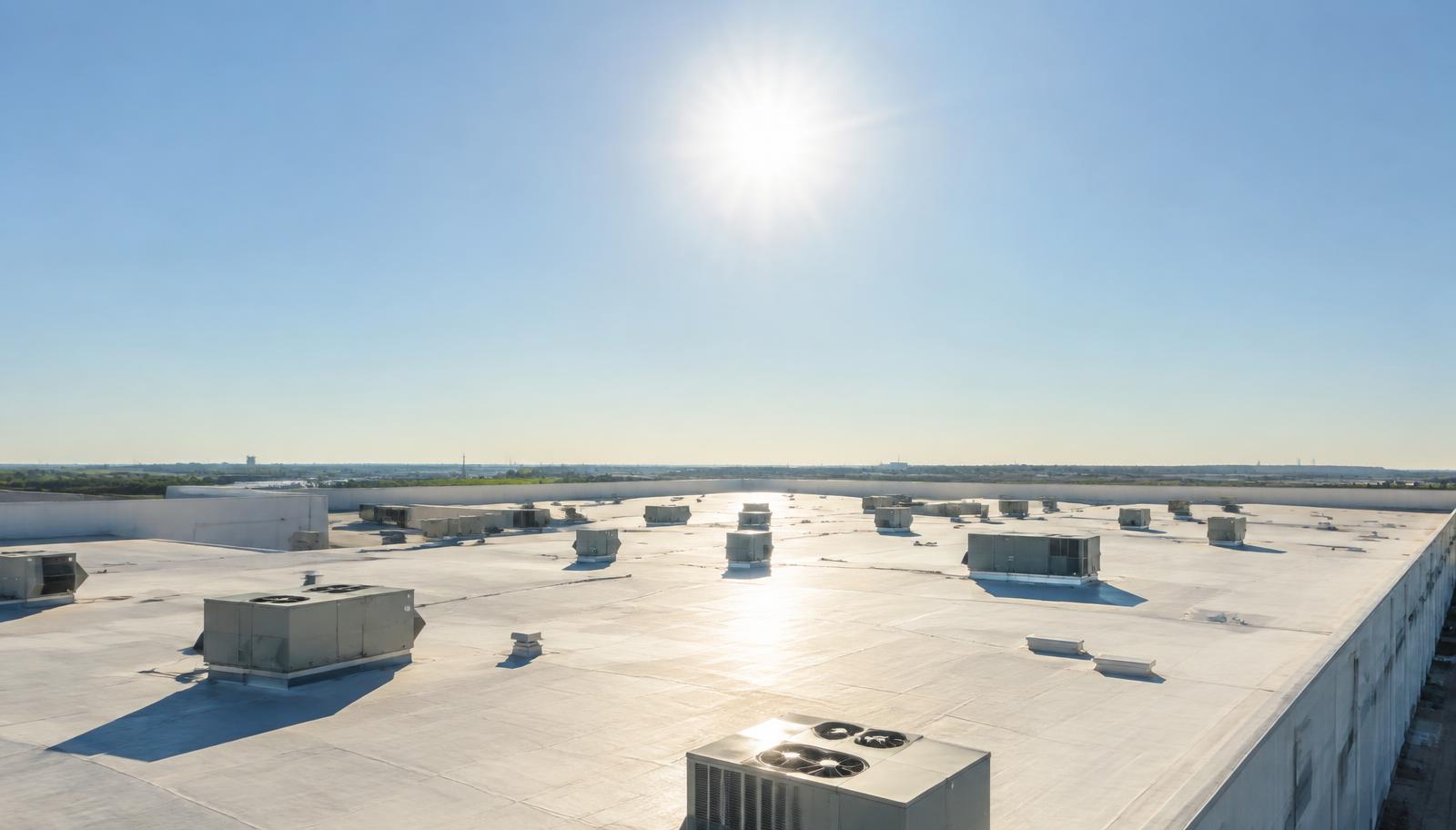
Heat enters facilities through multiple pathways, including:
- Roof systems
- Building envelopes
- Equipment exposure
- Solar gain
- Operational processes
Every facility operates under unique conditions.
Understanding those conditions is an important first step before evaluating thermal-management opportunities.
Industries Most Impacted
- Warehousing & Distribution
- Cold Storage
- Manufacturing
- Data Centers
- Municipal Infrastructure
- Commercial Buildings
Building Performance Perspective
Rather than asking:
Which product should be installed?
ICSD begins with:
What conditions currently exist and what performance objectives matter?
This approach supports more informed decision-making regarding potential technologies, strategies, and implementation pathways.
Continue exploring
Related Content
Related Solutions
- Building Performance
- Thermal ManagementIn Development
- Building Envelope PerformanceIn Development
Related Industries
Related Outcomes
- Durability
- Lifecycle Value
- Reduced Maintenance
- Sustainability
- Energy EfficiencyPending Evidence
References
- ICSD Digital Platform Blueprint
Selected industry resources reviewed in developing this article include:
- NanoTech Materials resource library
- Technical documentation
- Industry publications
- Building-performance research sources
Listed as informational references only. ICSD analysis is distinct from third-party source material.
Additional industry references may be added over time.
This article is general educational information, not a project-specific recommendation. Applicability depends on facility conditions, operating requirements, and qualified evaluation.